

AhlulBayt News Agency: At dawn on September 7, 1938, as the sun rose over the hills of Galilee, the village of Al-Bassa reeked of gunpowder and smoke. British soldiers, smiling with satisfaction, set houses ablaze one after another, while the screams of women whose children had vanished in the flames were lost in the indifferent Palestinian sky.
Al-Bassa, in northwest Palestine, was turned into a hell on earth on September 7. Two days earlier, a mine on the road had killed two British soldiers, and commanders at their headquarters were busy planning a “lesson” meant to remain forever in the memory of Palestine.
At dawn on September 7, armored vehicles of the Eleventh Hussars appeared on the horizon.
For twenty minutes, machine-gun fire tore through the village’s clay houses. Residents, awakened from sleep, were gunned down in the streets. Yet more horrifying than the bullets were the flaming braziers brought by the disembarked soldiers. They broke down doors and set the houses on fire. In several cases, women and children were still inside. The sound of exploding ammunition mingled with the screams of people burning alive.
Desmond Woods, an officer of the Ulster Regiment, described the scene years later in his memoirs: “I will never forget that day. We reached Al-Bassa and saw armored vehicles strafing the village with machine guns. It lasted twenty minutes. Then we went in and set the houses on fire with braziers. The village was leveled to the ground.”
But the tragedy did not stop at fire. Soldiers dragged about 50 men from their homes and packed them into a bus. They drove the bus onto an unmined road, and then detonated it by driving over a mine. Those who jumped from the bus before the explosion were shot. The remaining residents were forced, under threat of weapons, to bury the bodies in mass graves.
Officially, the number of victims was reported as 20, but survivors say that half of the village—between 50 and 100 people—were massacred that day. Four survivors were also taken to a military camp and tortured in front of their relatives.
When the regiment commander was summoned to meet, he calmly said that he had warned the village elders that if his officers were killed, “punitive action” would follow. The general’s response was: “Very well, but next time go a little slower.”
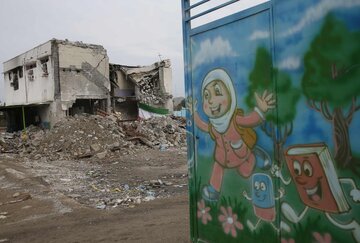
In Al-Bassa, however, there was no one left to go slower. That day, the village was reduced to ashes and has never been rebuilt. No investigation was conducted, and no apology was ever made. All that remains is the memory of fire and smoke brought to this land by British soldiers.
Sources:
Hughes, Matthew (2009a). "The Banality of Brutality: British Armed Forces and the Repression of the Arab Revolt in Palestine, 1936–39" (PDF). English Historical Review. CXXIV (507): 314–354. doi:10.1093/ehr/cep002. Archived from the original (PDF) on 21 February 2016.
"The 1938 al-Bassa Massacre and the Royal Ulster Rifles | The Pat Finucane Centre". www.patfinucanecentre.org
/129


Your Comment